
Engineering NE Asia's FX correction
Loose coordination, US happy, BoJ-BOK, DXY still higher

One leg of the dollar story
Those that subscribe to all of my Watchtower Series (Global, Dollar, BoJ) will know that I’ve been writing for almost a year now about remedies for the deep undervaluation of NE Asian currencies. The traditional low yielders, and most aligned and integrated into the US economic and geopolitical pivot are not straight forward trades. Capital flows and giant NIIP positions dominate trade flows.
I have described various ways that South Korea, Japan, and Taiwan could engineer stronger currencies, through a combination of higher nominal rates, pension fund repatriation, domestic capital market reforms, and consistent use of FX intervention. After all, that is why they have accumulated over $2trl in FX reserves over the years, right? The great shock absorber argument . . . right?
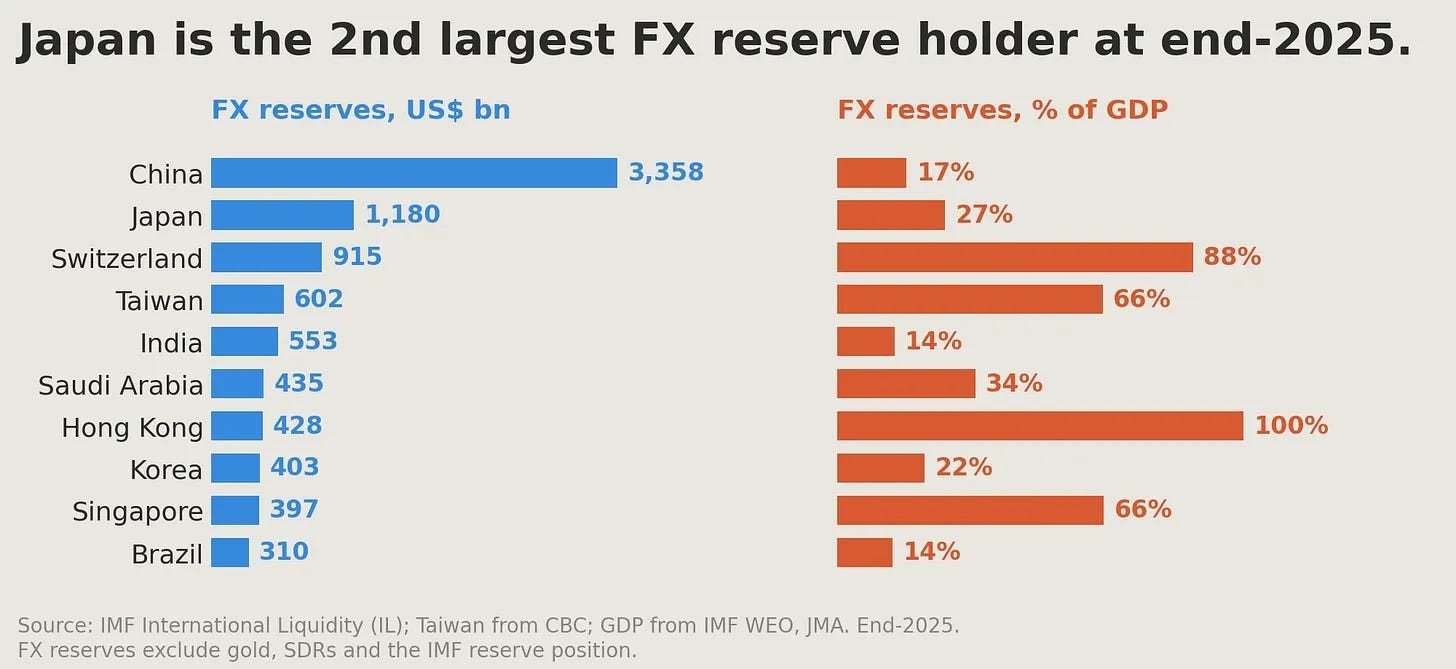
But of course, once the FX reserve war chest is accumulated, it always proves difficult to let go. The carry and investment return supports fiscal receipts. The large size relative to GDP influence sovereign ratings, FX volatility typically declines. Like a massive petroleum storage, FX reserve caches provide insurance against the unknown.
In the end, it would seem that rolling external shocks (Russia-Ukraine, US tariffs, Persian Gulf) have finally convinced North Asia that a stronger currency would be more useful in these uncertain times. Frustrated by previous intervention episodes, one by one, they have taken a more comprehensive policy approach to achieve their goals; all of which improve the effectiveness of FX intervention. Thus, preserving the vital currency hoard.
I also wrote in both the BoJ Watchtower and Dollar Watchtower the likelihood that the BoJ and BOK would increasingly find that they have much in common, and that coordinating/sharing economic intel can improve their effectiveness. Yesterday was the best evidence of this to date.
FX intervention
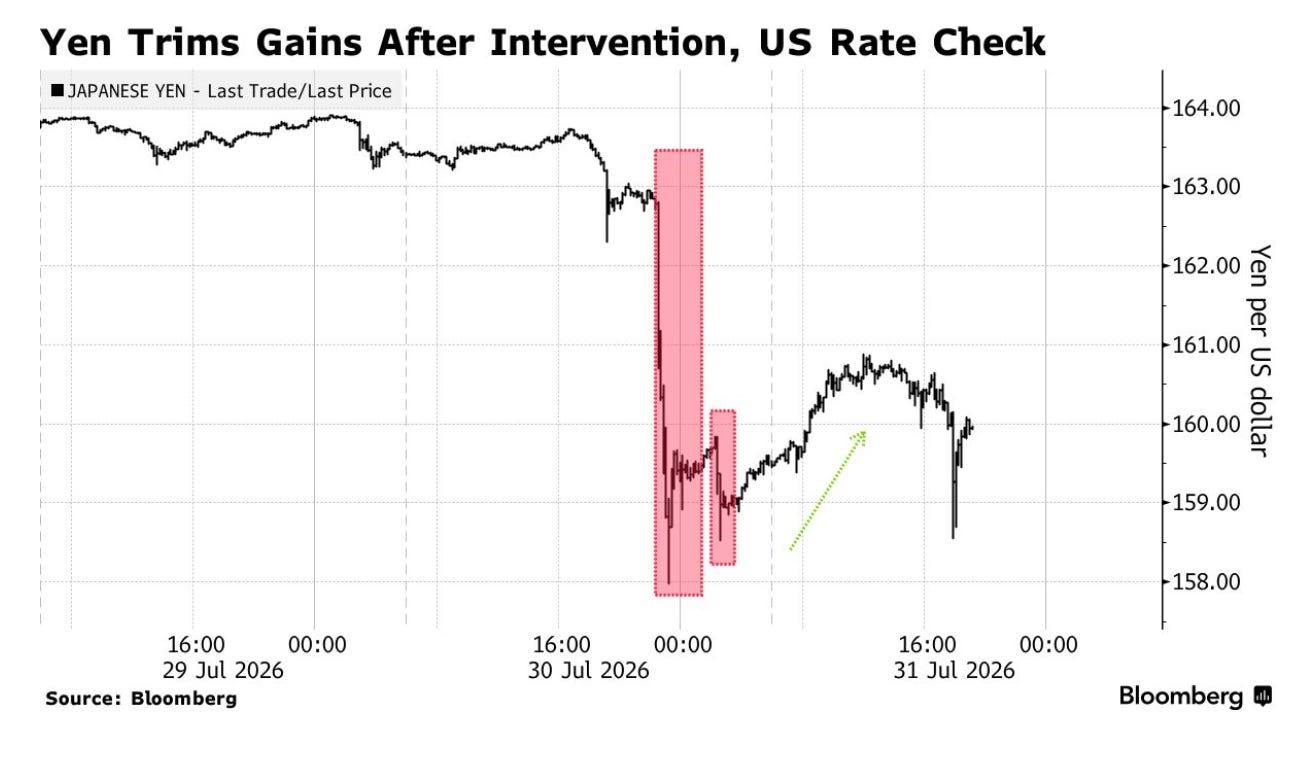
The surprise FX intervention yesterday by the BoJ was well timed and intelligently executed. Done in NY timezone, a day after many read the FOMC as dovish, with USDJPY already edging lower, and managing to convince the NY Fed to check rates at the same time, . . . all delivered what I suppose Vice Fin Minister Mimura would call the ‘new covert’ approach. Telecasting intervention is always counterproductive. Adding to this semblance of coordination was the well timed intervention on USDKRW by the BOK as well.
Bloomberg reports that intervention was approximately $58bln, given the change to BoJ accounts today. While the 3% move lower can be considered a tactical success, it is not enough to break the trend, nor is it fantastic bang for buck on $58bln.
BOK, for example, has been intervening every quarter since 2024 and only spent $22bln in total. Consistent intervention during July has managed to drive USDKRW 8% lower from its 30 June peak 1,550 down to 1,420 yesterday.
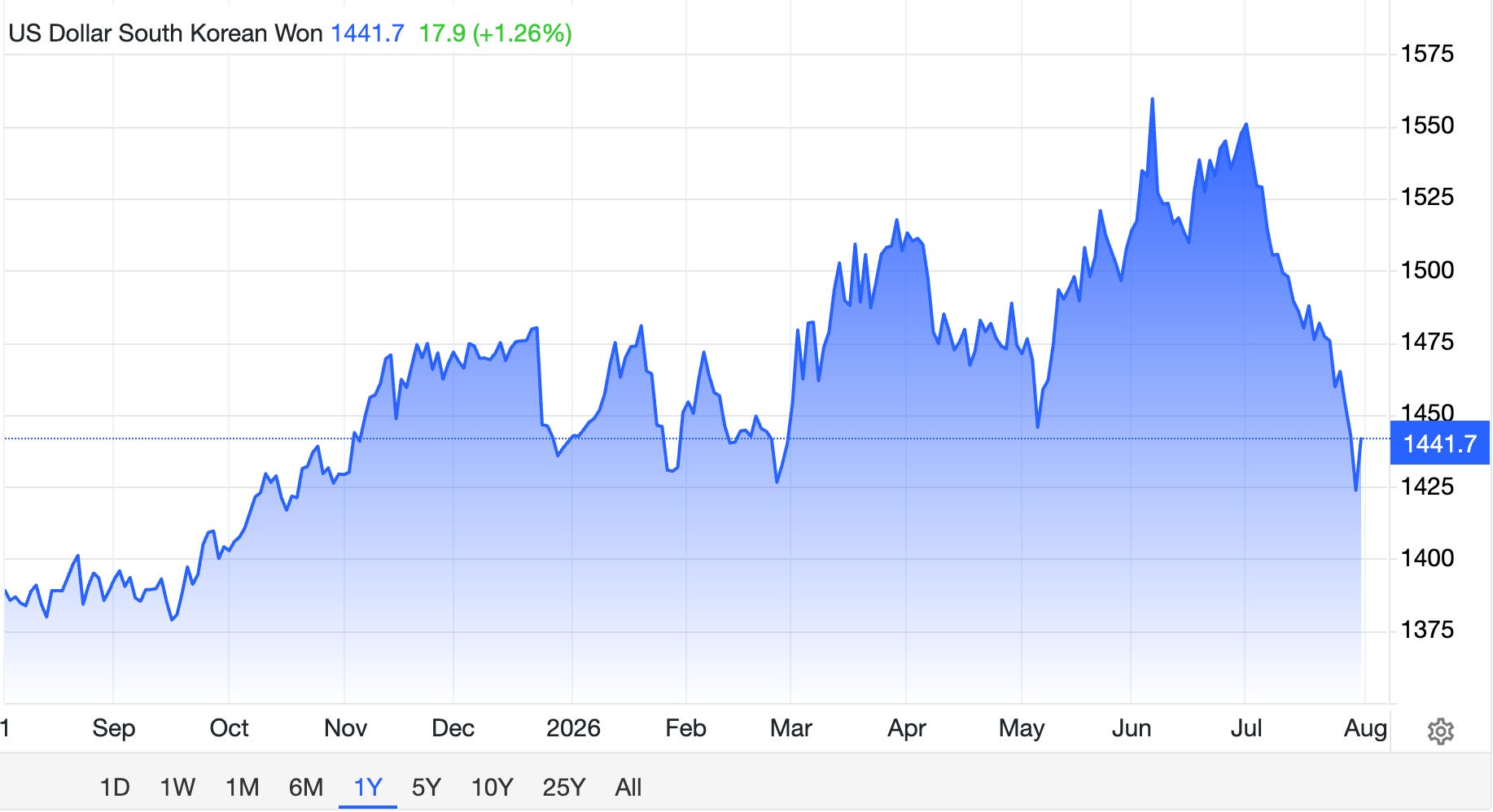
Of course, the BoK hiked rates (16 July), implemented 24 hour onshore Won trading (6 July) and saw wild volatility in offshore trading of AI stocks trigger a collapse in volume (-34% vs June). All of these contributed to a more powerful FX intervention outcome.
But this is in fact the point to take away for Japan as well. No single factor will produce the desired effect. Japan needs more rate hikes, it needs more overseas investment to be reallocated to domestic markets, rising equity vol and higher LT real JGB yields make a strong case for a changed investment choice.
Japan’s giant corporates, famous for retaining huge dollar export earnings offshore (estimated to be over $300bln), need to be convinced that domestic investment opportunities under Takaichi’s 17-sector plan offer real opportunity.
When all of these fundamentals converge, then FX intervention will have greater impact. USDJPY down -10-15%, not -3%. And levels will stick, because they will be followed by private sector flows.
