
Structural story calls for higher US dollar
Energy export pipeline, AI-capex boom turns into export boom, USMCA

US energy export surge
The market structure for energy exports in the second half is set up nicely for the US. Record US production will see LNG exports and refined products reach new highs in 2H-26. This is expected to add $45bln to export growth in 2026 vs 2025. While the US doesn’t have the most excess capacity to unlock (China & India have more), it has the most open export strategy, and offers geopolitical risk diversification away from the ME. There will be global demand for whatever it can produce.
The US supplied 63% of Europe’s total LNG imports in Q1-26 and is expected to see this rise to 66% for the full year. If the SoH chokepoint remains problematic for several years, analysts project this could rise as high as 80% by 2028.
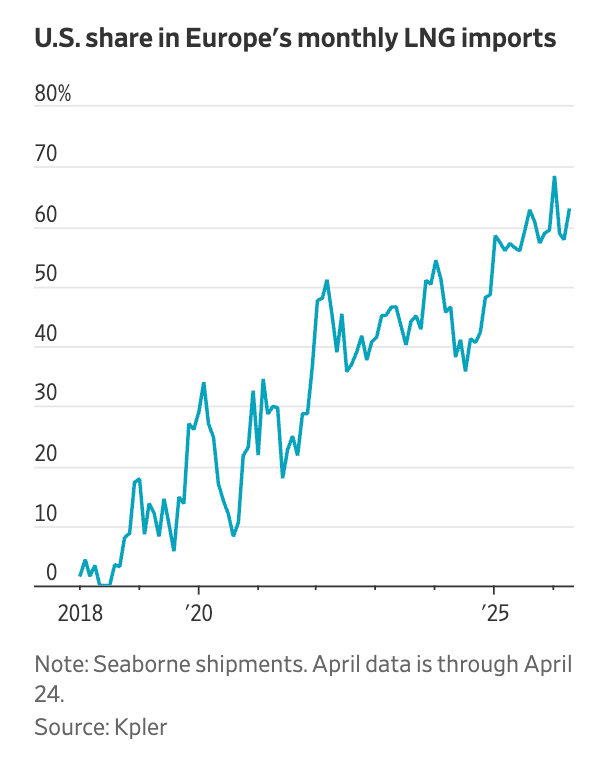
Japan’s pivot to the US is also in train. LNG is set to rise from 8% in 2025 to 10% in 2026, crude oil from 3% to 6%, and Refined Petroleum Products from 25% to 30%. Figures from 2027 will rise further as a full year’s demand is captured and storage reserves are replenished.
Taiwan has been even more aggressive, shifting LNG from 10% to 30% US sourced. South Korea is on schedule for a 30% increase in crude imports and 20% increase in LNG. Refined products will increase at least 10-15%. Latin America and even India have recorded major surges in US imports, particularly LNG & LPG.
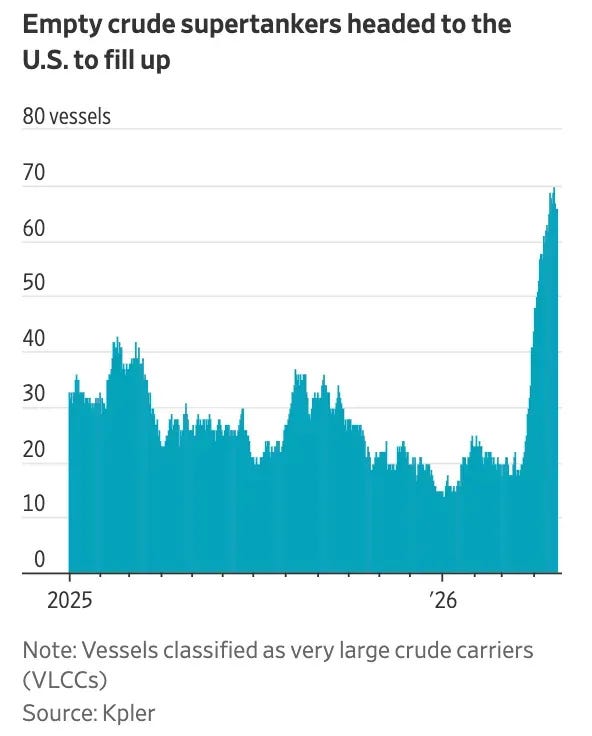
The main point to take away is that these crisis-related shifts are evolving into permanent supply diversification strategies. Importers are locking in long-term LNG contracts and building new infrastructure to accommodate the logistical shift away from the ME to North America. This strengthens the US’s number one export sector, Mineral Fuels & Oils, and expands a category of exports the US is willing to sell to everyone; like Agriculture, Transport & Aerospace, Gems & Precious Metals.
Full-stack diplomacy
This last point above is essential because the AI boom has created the largest, most strategic duel-use export category in history. Unlike energy, it is not a ‘sell as much as you can produce’ story. Staying ahead and winning the AI race means more than just leading on tech.
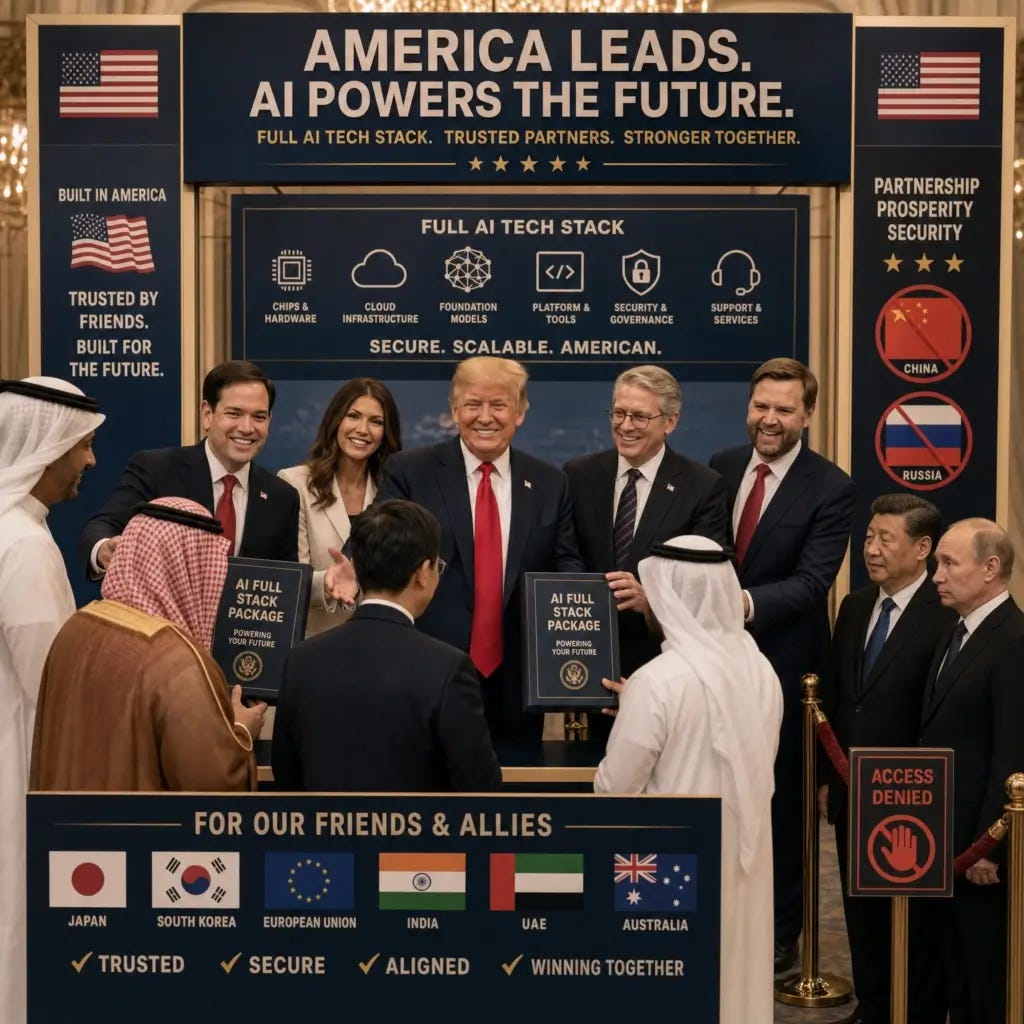
The US is busily trying to tie the sector down into a US-originating, America First, manufacturing and export business. Its export strategy is fully integrated into its industrial policy and national security strategy. The term of choice is ‘tech stack diplomacy’. Relating it to my ‘trust at risk’ framework, the American AI Exports Program is a high trust at risk relationship, while energy, Ag & Precious metals exports are a low trust at risk one.
The ‘full-stack’ export strategy implemented under the American AI Exports Program is explicitly designed to fulfil three pillars simultaneously: maximise export sales, enforce technological control, and secure domestic manufacturing. ‘Tech-stack diplomacy’ is aimed at preventing foreign nations from buying fragmented components to build their own sovereign ecosystems. The US wants its tech giants to sell indivisible, turnkey solutions.
